07.Oct.2026
CBAM for Steel Manufacturers: What Indian Steel Exporters Need to Know
The European Union's Carbon Border Adjustment Mechanism (CBAM) is changing how carbon emissions are considered in international trade. For steel manufacturers and exporters supplying the European market, understanding CBAM is becoming increasingly important.
CBAM places a carbon price on the embedded emissions of certain goods imported into the EU, helping align the carbon cost of imported products with the carbon costs faced by EU producers under the EU Emissions Trading System (EU ETS). The definitive CBAM regime has been applied since 1 January 2026.
For Indian steel manufacturers, CBAM is particularly relevant because iron and steel are among the sectors covered by the mechanism. However, coverage depends on the applicable customs classification and the specific goods covered by the CBAM rules.
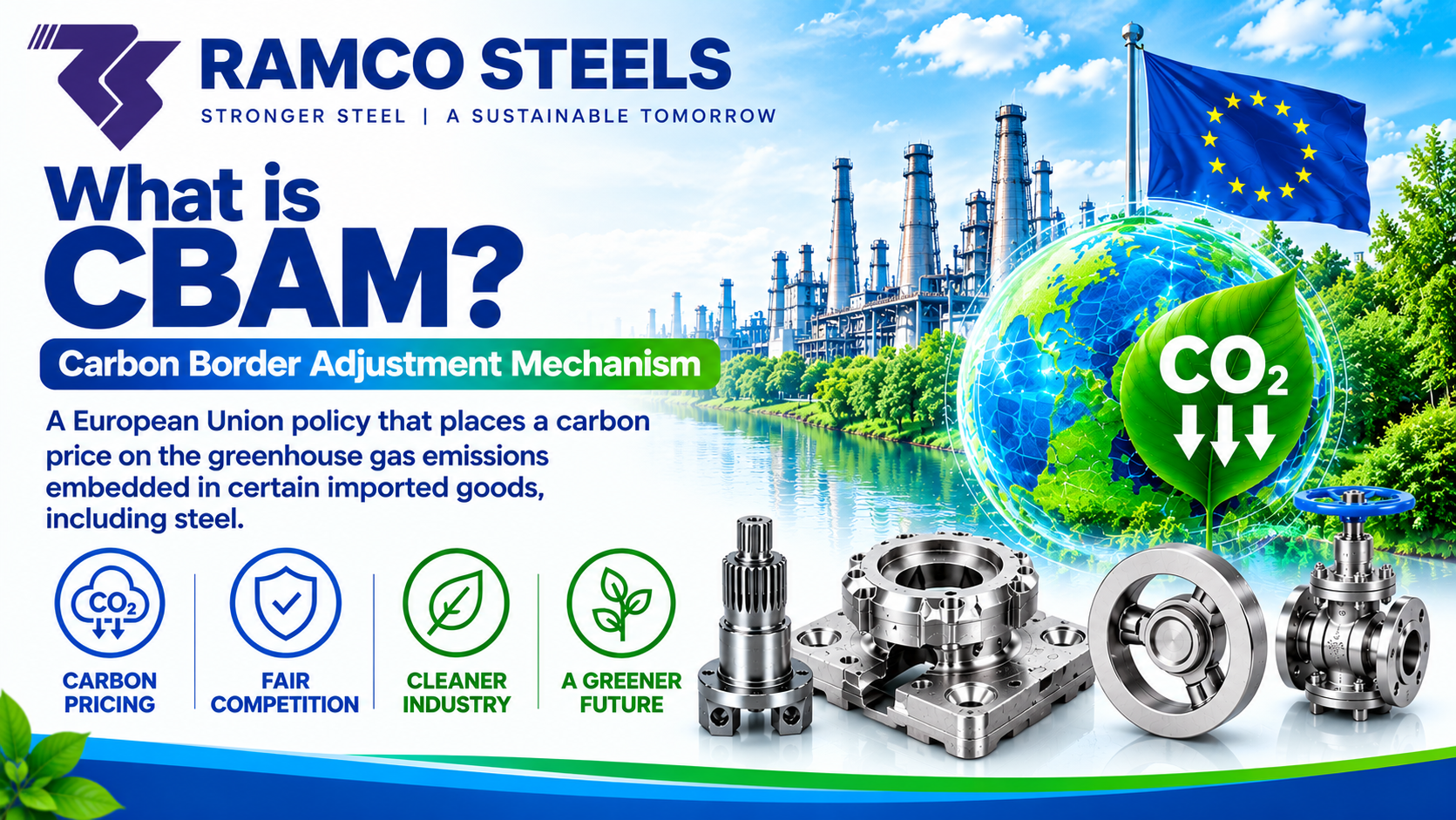
The Carbon Border Adjustment Mechanism (CBAM) is an EU policy designed to address carbon leakage and ensure that the carbon emissions associated with certain imported goods are accounted for when those goods enter the European market.
Under CBAM, EU importers and other responsible parties must comply with requirements relating to the embedded emissions of covered goods. The mechanism is intended to create a closer link between the carbon cost of imported products and the carbon cost faced by EU producers.
The mechanism currently covers six sectors:
For steel companies, this means that carbon emissions data can become an important part of international customer and supply-chain requirements.
Steel production can involve significant greenhouse gas emissions, depending on the production route, energy sources, raw materials and manufacturing processes.
With CBAM now in its definitive phase, European customers may require more detailed information about the emissions associated with products sourced from non-EU manufacturers.
The European Commission has published sector-specific guidance for non-EU operators, including dedicated guidance for iron and steel production and guidance on calculating embedded emissions.
For steel manufacturers, preparing reliable emissions information can therefore become an important part of maintaining transparent and efficient relationships with EU buyers.
Carbon leakage can occur when production shifts to regions where carbon constraints are lower, potentially undermining emissions reductions.
CBAM is designed to reduce this risk by accounting for the carbon emissions embedded in certain imported goods.
CBAM increases the importance of understanding the emissions associated with covered products.
For manufacturers, this means emissions data can become relevant not only for environmental reporting but also for international trade and customer requirements.
CBAM creates an economic incentive for covered supply chains to reduce embedded emissions.
For steel manufacturers, this can increase the importance of:
CBAM requires reliable information about embedded emissions in covered goods.
This makes accurate production data increasingly valuable for manufacturers supplying European customers.
CBAM currently applies to selected goods within six sectors: cement, iron and steel, aluminum, fertilizers, electricity and hydrogen.
Importantly, simply being part of the steel industry does not automatically mean that every steel product is covered.
CBAM coverage is determined by the applicable Combined Nomenclature (CN) codes and the goods listed under the relevant CBAM legislation.
Therefore, steel manufacturers and exporters should assess the exact products and customs classifications involved rather than if all steel-related products fall under CBAM.
For Indian steel manufacturers exporting covered products to the EU, CBAM can create a greater need for reliable and traceable emissions information.
The formal CBAM obligations generally apply to the relevant EU importer or authorized CBAM declarant, rather than automatically placing the same legal obligation on the non-EU manufacturer.
However, the manufacturer may need to provide information about the emissions associated with the goods so that the EU-side requirements can be fulfilled.
This makes CBAM readiness important for Indian steel exporters, particularly those serving European customers.
For Ramco Steels, CBAM preparation can support both export readiness and better understanding of product-level carbon performance.
Providing reliable production and emissions information can help European customers obtain the data they need for their CBAM-related obligations.
CBAM preparation can encourage a more structured approach to measuring and documenting emissions associated with manufacturing processes and relevant inputs.
Once emissions data is available, manufacturers can identify processes, energy sources and production activities where efficiency improvements may be possible.
European buyers are increasingly interested in supply-chain sustainability and emissions information.
Well-organized CBAM-related data can help manufacturers communicate more effectively with customers about the carbon characteristics of their products.
Understanding product-level emissions can help manufacturers evaluate potential investments in:
CBAM preparation starts with understanding what data is available and how consistently it is recorded.
Depending on the applicable CBAM requirements, manufacturers may need to establish processes for collecting and documenting information related to production and embedded emissions.
A practical preparation framework can include:
Maintain accurate information about production quantities, processes and relevant manufacturing activities.
Track electricity and fuel consumption associated with production processes.
Establish appropriate methods for determining emissions associated with covered goods.
Understand relevant inputs and their associated emissions where required under the applicable methodology.
Identify the relevant product and CN code to determine whether the product falls within CBAM coverage.
Maintain consistent records that can support customer requests and applicable verification or reporting processes.
The European Commission's 2026 guidance specifically addresses embedded-emissions calculation, monitoring and reporting for non-EU operators.
One important distinction is that CBAM preparation and CBAM legal responsibility are not necessarily the same thing.
The EU importer or authorized CBAM declarant has the relevant obligations under the definitive regime. For non-EU manufacturers, the practical role may include providing accurate information about the emissions embedded in exported goods.
Therefore, Indian steel manufacturers should not view CBAM simply as an additional certification. Instead, it is useful to consider it as a combination of:
Product information + emissions data + documentation + supply-chain transparency.
A structured approach can make CBAM preparation easier.
Review products currently exported or planned for export to the EU.
Determine whether the relevant products fall under the applicable CBAM CN codes.
Document the manufacturing processes and production routes associated with covered goods.
Establish a consistent process for collecting the required production, energy and emissions information.
Ensure that emissions information can be linked to the relevant production process and product where required.
Discuss the information required by European customers and establish a practical process for sharing relevant data.
CBAM implementation requirements and guidance can evolve. Manufacturers should regularly review official European Commission guidance and applicable legislation. The Commission published updated definitive-period guidance for non-EU operators in August 2026, including dedicated iron and steel guidance.
Carbon information is becoming increasingly relevant to global manufacturing and international trade.
For steel manufacturers exporting to Europe, the ability to understand, measure and communicate product-related emissions can become an important part of supply-chain management.
CBAM therefore represents more than a carbon-pricing mechanism. For manufacturers, it also highlights the growing importance of emissions measurement, data accuracy, production efficiency and supply-chain transparency.
The Carbon Border Adjustment Mechanism (CBAM) is an important development for steel manufacturers supplying the European Union.
Because iron and steel are among the sectors covered by CBAM, Indian steel exporters should understand the products affected, applicable emissions methodologies and the information European customers may require.
For companies such as Ramco Steels, preparing accurate emissions and production data can support EU customer requirements, improve visibility into carbon performance and help identify opportunities for operational efficiency.
CBAM preparation is ultimately about being ready for a trading environment where carbon data is becoming an increasingly important part of product and supply-chain information.
What does CBAM stand for?
CBAM stands for Carbon Border Adjustment Mechanism. It is an EU mechanism that addresses the embedded greenhouse gas emissions of certain goods imported into the European Union.
When did CBAM become effective?
The definitive CBAM regime began on 1 January 2026.
Does CBAM apply to steel?
Yes. Iron and steel are among the sectors currently covered by CBAM. However, coverage depends on the specific goods and applicable customs classifications.
Does CBAM apply to every steel product?
No. CBAM applies to specified goods identified under the applicable CBAM legislation and customs classifications. Manufacturers should check the relevant CN codes rather than assuming all steel products are covered.
Who is responsible for CBAM compliance?
The relevant EU importer or authorised CBAM declarant has the formal obligations under the definitive regime. Non-EU manufacturers may need to provide emissions and production information to support the importer's CBAM requirements.
Why should Indian steel manufacturers prepare for CBAM?
Preparation can help manufacturers respond to EU customer data requirements, improve emissions visibility, support supply-chain transparency and identify opportunities to reduce production-related emissions.
What should steel manufacturers do first?
A practical starting point is to identify EU-exported products, check their CBAM coverage and applicable CN codes, map the relevant production processes, and establish reliable systems for collecting emissions-related data.



Corporate Office
Plot No. 75, Sector 25,